 Nourivo
Social Contexts of Eating
Understanding how social environments shape eating experiences.
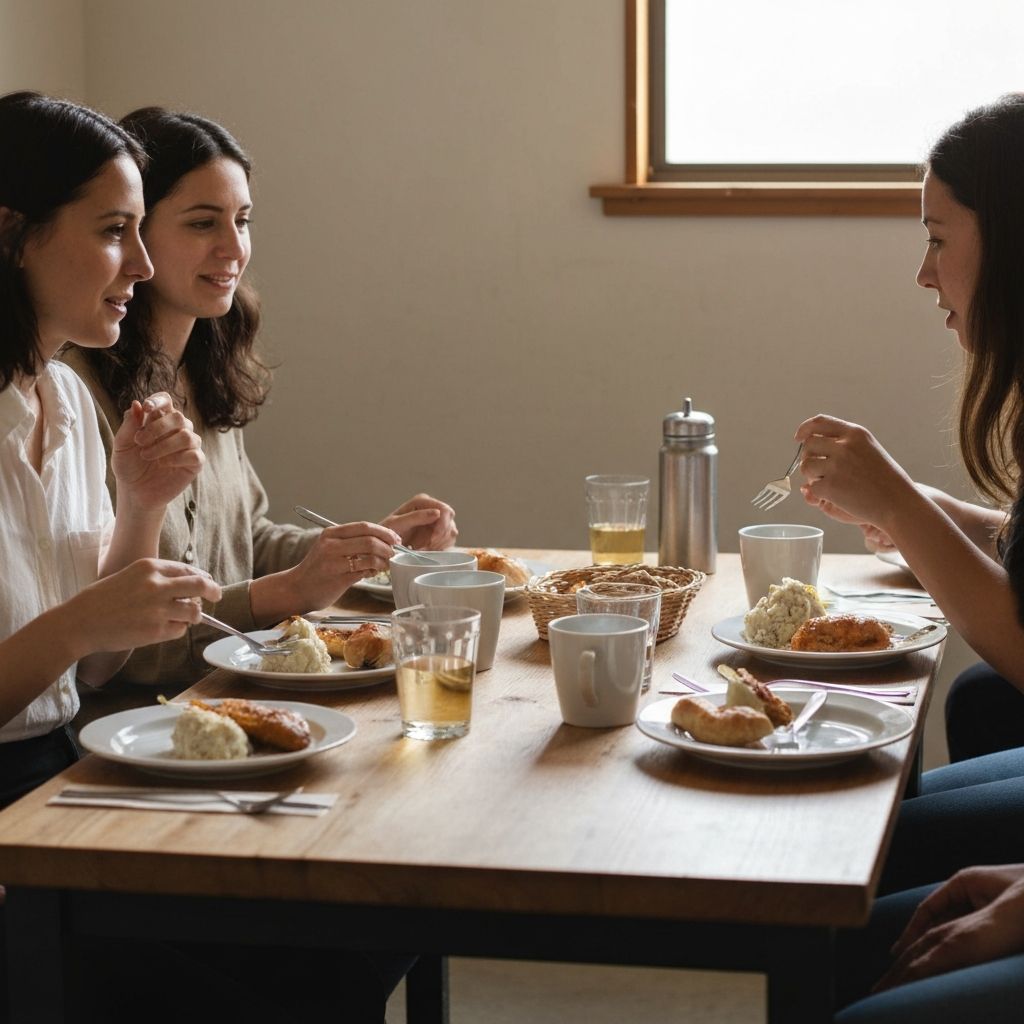
Eating represents a fundamentally social activity in human cultures. While food serves biological functions, the contexts in which eating occurs significantly shape how people experience and approach food consumption in daily life.
Communal Eating Traditions
Shared meals have historically served as important social occasions across cultures. In the UK context, family Sunday lunches, holiday gatherings, and celebration meals exemplify traditional communal eating practices that continue in various forms.
These gatherings serve multiple social functions beyond nutrition. They facilitate conversation, strengthen relationships, mark important occasions, and transmit cultural practices across generations. The social aspects of such meals often receive as much emphasis as the food itself.
Modern interpretations of communal eating vary. While some families maintain regular shared meal traditions, others adapt these practices to contemporary schedules and circumstances, creating new forms of social eating that reflect current lifestyles.
Family Dining Dynamics
Family meals represent a significant social eating context, though their forms and frequency vary widely across households. Some families regularly eat together, viewing shared meals as valuable family time for communication and connection.
Family dining arrangements reflect household structures and individual schedules. Nuclear families, extended families, and various other household compositions each develop their own patterns based on practical considerations and cultural preferences.
The presence or absence of regular family meals relates to multiple factors including work schedules, children's activities, living arrangements, and family priorities. Understanding family eating patterns requires acknowledging this diversity without prescribing particular arrangements.
Workplace Social Eating
Workplaces constitute another important social eating context. Lunch breaks may involve eating alone, with colleagues, or in various group configurations. These choices reflect workplace cultures, physical arrangements, and individual preferences.
Some workplace cultures encourage social lunches, viewing them as opportunities for team building and informal communication. Other environments have more individualized eating patterns, with employees making independent choices about their lunch arrangements.
Workplace eating spaces range from dedicated canteens and break rooms to desk eating and external venues. These physical arrangements influence the social dimensions of workplace eating experiences.
Social Occasions and Celebrations
Celebrations and social occasions frequently center around food. Birthdays, weddings, religious holidays, and cultural festivals typically involve shared meals or special foods associated with the particular occasion.
The UK's multicultural society encompasses diverse celebration traditions, each with distinctive food practices. These occasions demonstrate how eating serves social and cultural functions beyond sustenance.
Social eating during celebrations often involves foods that may differ from everyday eating patterns. Special occasion foods carry symbolic meanings and contribute to the significance of the events they accompany.
Peer Influence and Social Norms
Social groups develop shared norms around eating that influence individual behaviors. Friend groups, families, and communities each establish informal expectations about food choices, eating occasions, and dining practices.
Peer influence on eating varies across age groups. Adolescents and young adults may experience particularly strong peer effects on food choices, while other age groups balance peer influence with established personal patterns.
Understanding social influence on eating acknowledges that food decisions occur within social contexts rather than in isolation. Individual choices interact with group norms and social expectations in complex ways.
Eating Alone Versus Eating Together
Contemporary UK life includes both social and solitary eating occasions. Living arrangements, work patterns, and personal preferences all influence the balance between eating alone and eating with others.
Solitary eating serves practical functions when schedules or circumstances do not align with social eating opportunities. Many people regularly eat some meals alone while sharing others, creating mixed patterns that suit their situations.
The experience of eating alone versus with others differs in various ways beyond the presence or absence of companions. Meal duration, food choices, and attention to the eating experience itself may vary between these contexts.
Restaurant and Public Eating Contexts
Eating in restaurants and other public venues represents another social dimension of food consumption. These settings provide spaces for social interaction around food outside domestic environments.
Restaurant dining encompasses various social configurations from romantic dinners to family outings to business meetings. The social nature of the occasion influences venue choice, food selection, and dining behaviors.
Public eating venues serve diverse social functions. They provide spaces for celebrations, casual socializing, convenience when cooking is impractical, and opportunities to experience different cuisines and dining styles.
Digital Era Social Eating
Contemporary technology has introduced new dimensions to social eating. Video calls enable shared meal experiences across distances, while social media creates platforms for sharing food experiences beyond immediate physical contexts.
Food photography and sharing on social platforms represent modern forms of social engagement with eating. These practices create virtual communities around food interests and enable new forms of food-related social interaction.
The integration of digital elements into eating experiences reflects broader technological changes in social interaction. These developments add layers to traditional in-person social eating without fully replacing it.
Cultural Variations in Social Eating
Different cultural backgrounds bring varied approaches to social eating. Customs regarding hospitality, table manners, meal sharing, and the social significance of food differ across cultural traditions represented in UK society.
Some cultures emphasize communal serving and shared plates, while others favor individual portions. Attitudes toward conversation during meals, appropriate topics of discussion, and dining etiquette vary across cultural contexts.
Understanding these variations helps contextualize the diversity of social eating practices observable in multicultural UK communities. This diversity reflects the varied cultural heritages present in contemporary British society.
Educational Perspective on Social Eating
Recognizing eating as a social activity provides context for understanding food choices and eating patterns. Social factors represent one element among many that shape how people approach food in daily life.
This article describes social dimensions of eating without prescribing particular social eating arrangements. Individual circumstances, preferences, and cultural backgrounds appropriately vary in how they integrate social aspects into eating practices.
Educational Context
This article provides descriptive information about social aspects of eating in UK contexts. It does not constitute advice about individual social eating practices. Approaches to social eating appropriately vary based on personal circumstances, cultural backgrounds, and individual preferences.